Tuesday, August 4, 2009

Simple Hydroponics


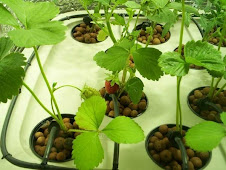
What if hydroponic gardening was as simple as a bucket of sand with a single plant in it? This can be what it is, right up to a hydroponic system using measuring instruments to control water cycles, nutrient strengths and lighting times.

A system usually consists of these basic parts: a growing tray, a tank or reservoir, a timed submersible pump to irrigate the plants and an air stone and pump to oxygenate the nutrient solution. Light will of course be required and that can be natural or artificial. There are many different types lights to choose from, from fluorescent to LED to complete lighting kits.

Sunday, August 2, 2009

Light up your clones


Unlike seedlings, clones need light from day one, after rooting. Start with lower and diffused light intensities from sources such as T-5 or T-8 fluorescent lighting. During the first few days, the cuttings will do best with just one to two 24 watt strips over the top of a standard 10" x 20" propagation tray.

You can gradually increase the light intensity after a few days by lowering the light fixtures closer to the propagation dome. However, make certain the temperature doesn't rise above 850 F inside the dome after making this adjustment.

Once the roots develop, you can switch to HID lights that provide mostly red and blue growth stimulating spectrums. Condition your plants to this more intense light by gradually decreasing the distance between the plants and light fixtures. After a couple of weeks, your plants should be able to handle very bright levels of light which will encourage healthy, robust and fast-growing plants.

Saturday, August 1, 2009

Which type of Rock Wool to choose


There are several types of Rock Wool designed for the propagation of seeds and cuttings. The best for hydroponic hobbyists is considered to be the Single Block System known as SBS. This system consists of small individual cubes or mini blocks of Rock Wool on a small plastic tray. This makes the plants easy to handle and are ideal for selling or giving away.

Be certain to pre-treat the rock wool for 24 hours before use. Use a product that will
reduce the alkaline nature of the media until it balances out at between 5.8 and 6.3. One advantage of Rock Wool is its ability to hold enough water to last through the average period of time required for the cuttings to root. However, you will need to use a humidity dome.

Friday, July 31, 2009

Enjoy the convenience of organic products in a re-circulating system

Re-circulating systems are a convenience but some growers feel they are restricted to using conventional salt based nutrients. Thus, they miss out on the rewards associated with organics. Here is how to use organics in a re-circulating system.

Reduce your conventional salt based nutrient to a 70% concentration. Then add an organic base nutrient at 30% the recommended strength.

The addition of the organic nutrient will help stabilize the solution chemistry while buffering the salinity and pH value of the synthetic based nutrient in the root zone and growing media. Also, the additional building blocks supplied by the organic base nutrient will increase yields, crop health, flavor, aroma and essential oil production.

Thursday, July 30, 2009

Mini Caddy Hydroponics System


Do you have a spare closet? Introducing the "Mini Caddy", the ultimate compact home hydroponics system. Terrific for confined spaces.

The Mini Caddy is small enough to fit in any closet and is ideal when space is a concern. The inline cooling system keeps the inside of the cab always under 5ºF above room temperature. With this cabinet your growing will be easy, high yielding and above all, safe. The Mini Caddy arrives pre-assembled and requires less than 15 minutes of setup time to start growing. This affordable hydroponics system is perfect for experts and beginners alike.

Tuesday, July 28, 2009

Light vs temperature to keep plants cool


During the summer months, you may need to make a compromise between light levels and the optimal temperatures for your plants. Otherwise you could end up over- heating the tops.

Your HID (high intensity discharge)lights will also contribute to high temperatures. This creates high heat in both the growing area and the internal core of your plants.

By raising the lights a few inches you can help reduce some of the heat stress on the
plants. This slight loss of light will do much less harm than the heat.

Monday, July 27, 2009

When to water... more or less

When to water and how much has always been something of a guess. Generally speaking, plants begin gradually using more water at the start of their flowering cycle. Peak water consumption comes just after mid-flowering. After that, water needs taper off.

During the ripening phase, water use is lessened even though the plants are at their largest mass. It's easy to over-water during this phase so be careful not to drown the
roots.